

How to Wash Bandier Leggings Without Stretching or Fading: A Care Guide for Performance Fabrics
We design our leggings to move with you through hundreds of workouts, but their longevity depends on how you care for them between sessions. Performance fabrics — the blends of nylon, spandex, and polyester that give leggings their compression and moisture-wicking properties — require different handling than cotton basics. Toss them in a hot dryer or use fabric softener, and you’ll break down the elastic fibers that keep them snug and supportive.
This guide walks through the specific leggings care steps that preserve the shape, color, and compression of your activewear, whether you own All-Access Leggings or any other style in our lineup. Follow these practices and you’ll get years of wear from the same pairs.
Turn Leggings Inside Out Before Every Wash
Flipping your leggings inside out before washing protects the outer fabric from abrasion and friction in the drum. Most pilling and color fading happens on the exterior surface, where the fabric rubs against other garments and the machine walls.
This simple step also shields any reflective details, logos, or mesh panels from direct contact with zippers and hooks. The interior lining sees less wear during a typical workout, so exposing it to the wash cycle instead preserves the outer finish that people actually see.
Wash in Cold Water on a Gentle Cycle
Hot water breaks down spandex and elastane fibers faster than anything else you can do in a washing machine. These fibers are what give your leggings their stretch and recovery — once they degrade, the fabric sags and loses compression.
Set your machine to cold water and choose the gentle or delicate cycle. Cold water is just as effective at removing sweat and bacteria when paired with a quality detergent, and it prevents dye from bleeding out of dark fabrics. If your leggings are heavily soiled after a muddy trail run, pre-soak them in cold water for fifteen minutes rather than cranking up the temperature.
Skip Fabric Softener and Dryer Sheets Entirely
Fabric softener coats synthetic fibers with a waxy residue that blocks their moisture-wicking channels. Once those channels are clogged, sweat can’t evaporate as efficiently, and your leggings feel clammy during workouts.
Dryer sheets cause the same problem and add static cling to the mix. Neither product is necessary for activewear — the fabrics are already engineered to feel smooth against skin. If you want a fresh scent, add a capful of white vinegar to the rinse cycle instead; it removes odor-causing bacteria without leaving residue.
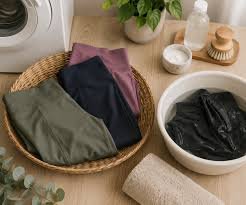
Air Dry Flat or Hang to Preserve Elastic
The single biggest mistake people make is throwing leggings in a hot dryer. High heat melts the elastic fibers that give the fabric its shape memory, and once those fibers are damaged, the waistband rolls down and the knees bag out.
Lay your leggings flat on a drying rack or hang them by the waistband on a hanger. Air drying takes longer, but it preserves the compression and fit for hundreds more wears. If you’re in a rush and must use a dryer, choose the lowest heat setting (or air-dry mode) and remove the leggings while they’re still slightly damp, then finish air drying them.

Store Leggings Folded, Not Hung by the Waistband Long-Term
Why Hanging Stretches Out the Elastic
Leaving leggings draped over a hanger for weeks at a time puts constant tension on the waistband elastic, which causes it to stretch and lose its grip. The same activewear construction principles that keep fabric snug during movement also make it vulnerable to prolonged stress in storage.
Fold your leggings along the inseam and stack them in a drawer instead. This method distributes weight evenly and keeps the elastic relaxed between wears. If drawer space is tight, roll each pair into a compact bundle — rolling works just as well as folding and makes it easier to see all your options at a glance.
Small Habits That Add Up to Years of Wear
The difference between leggings that last two seasons and leggings that last five comes down to consistent leggings care habits. Cold water, air drying, and skipping fabric softener aren’t difficult steps — they just require a small shift from how you might wash cotton basics.
We build our pieces to withstand intense movement, but the fabrics still need gentle handling off the mat. Treat your activewear with the same attention you give to choosing the right pieces in the first place, and you’ll keep the same leggings in rotation for years. For more detail on fabric performance and garment construction, Spandex’s material properties offer helpful context on why heat and certain chemicals degrade elastic fibers over time.
Notes
Wash leggings after every workout or wear session where you’ve sweated in them. Sweat contains salts and oils that break down fabric fibers and create odor-causing bacteria if left sitting. If you wore leggings for light errands without sweating, you can wear them a second time before washing.
Yes, but choose a liquid detergent without added dyes or heavy fragrances. Powder detergents sometimes leave residue in the fabric’s weave, and harsh chemicals can degrade spandex over time. A gentle, free-and-clear formula works best for maintaining the integrity of performance fabrics.
Add half a cup of white vinegar to the rinse cycle, or soak the leggings in a solution of one part vinegar to four parts cold water for thirty minutes before washing. Vinegar breaks down the bacteria that cause odor without damaging fabric. Avoid using bleach, which weakens elastic fibers and causes discoloration.
The core principles — cold water, gentle cycle, air drying — apply to nearly all activewear blends. Fabrics with higher nylon content can handle slightly more agitation than those with more spandex, but the safest approach is to treat every pair gently. If your leggings include special finishes like water resistance or antimicrobial treatments, those coatings last longer when you avoid high heat and harsh detergents.
Never use a hot iron directly on performance leggings — the heat will melt synthetic fibers and leave shiny marks or even holes. If wrinkles are an issue, steam them lightly from a few inches away, or hang them in a steamy bathroom while you shower. Most wrinkles fall out naturally once you put the leggings on and start moving.
You can wash leggings with other activewear made from similar fabrics, but keep them away from items with zippers, hooks, or rough textures that can snag the material. Washing a full load of only activewear on the gentle cycle is ideal. Avoid mixing leggings with heavy cotton towels or denim, which create excess friction in the drum.